

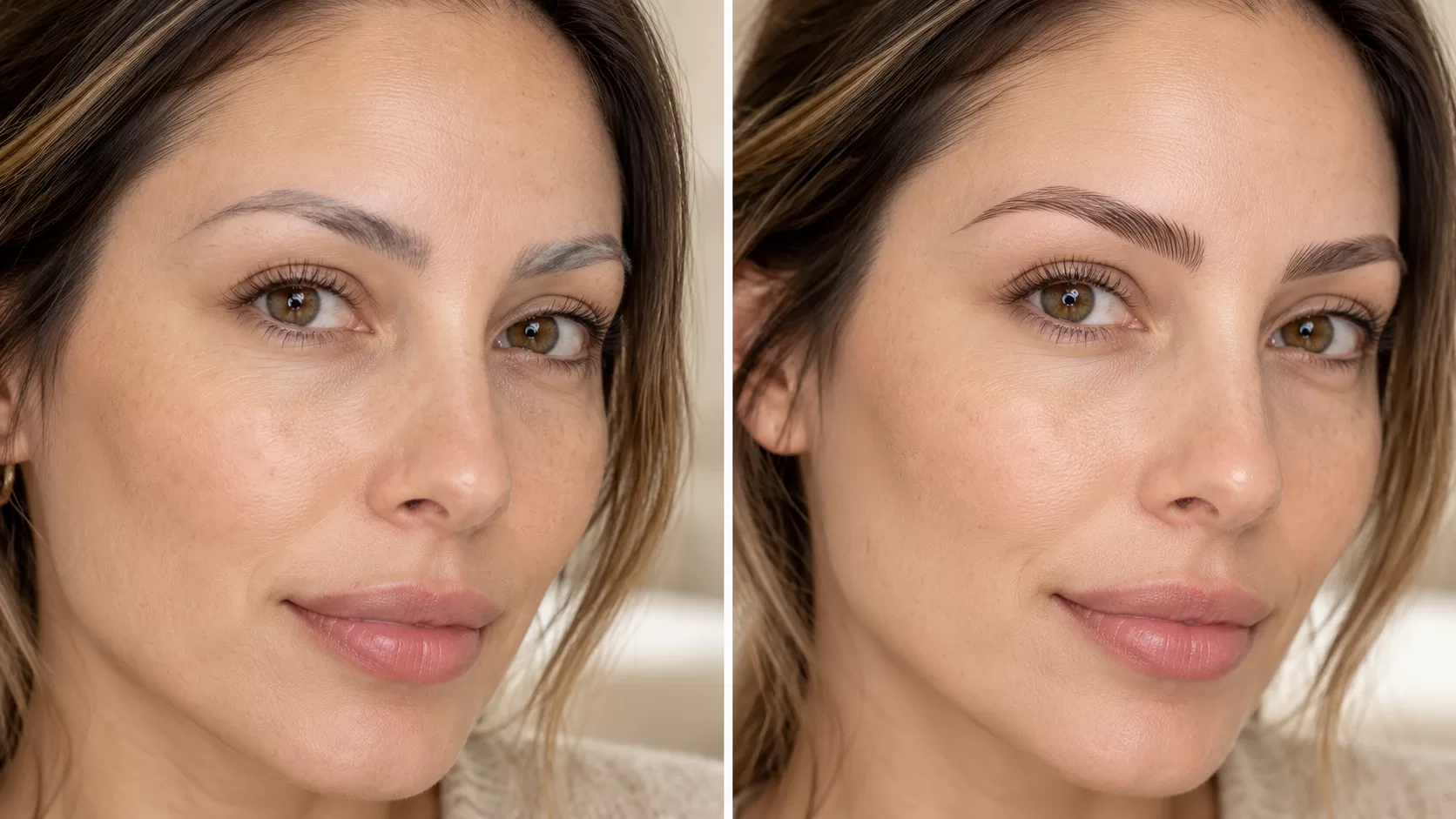
You finally decide you want softer, more realistic brows.
You find those delicate nano hair strokes online. They look airy. Natural. Like actual eyebrow hairs instead of a block of pigment.
Then you look at your own brows.
And there it is.
The old microblading from three years ago.
Maybe it has faded gray.
Maybe the shape is still visible even though the color has gone strange.
Maybe one tail is darker than the other.
Or maybe you were hoping a fresh set of nano brows could simply be placed over everything and make the old work disappear.
So here is the answer most people actually need:
Sometimes nano brows can be added over old microblading. Sometimes the old pigment needs correction first. And sometimes adding more pigment is exactly what you should not do.
That is why an in-person evaluation matters.
If you are researching nano brows over old microblading in Houston, the decision should be based on what is currently inside your skin, not simply on how many years ago your first appointment happened.
Old permanent makeup does not disappear according to a calendar.
It fades differently from person to person.
And when it comes to correction, what is already there controls almost everything that comes next.
Quick answer: Can nano brows go over old microblading?
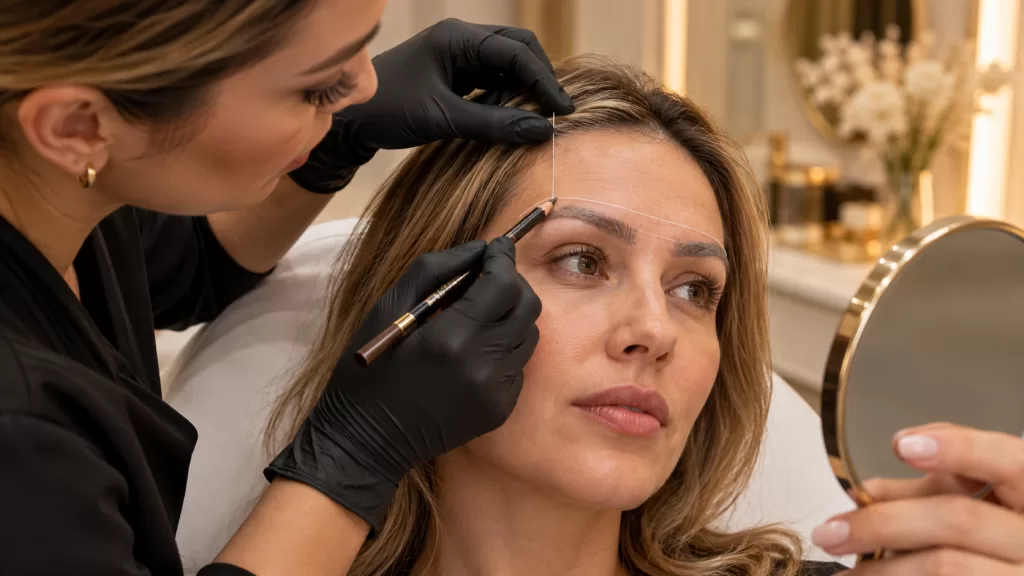
Yes, but only when the existing pigment is faded enough, positioned inside the new desired brow shape, and light enough that new nano hair strokes can remain visually distinct.
If the old microblading is dark, heavily saturated, blurred, discolored, or outside the shape you now want, simply adding nano strokes on top can make the brows look heavier rather than more natural.
In those cases, the realistic options may be:
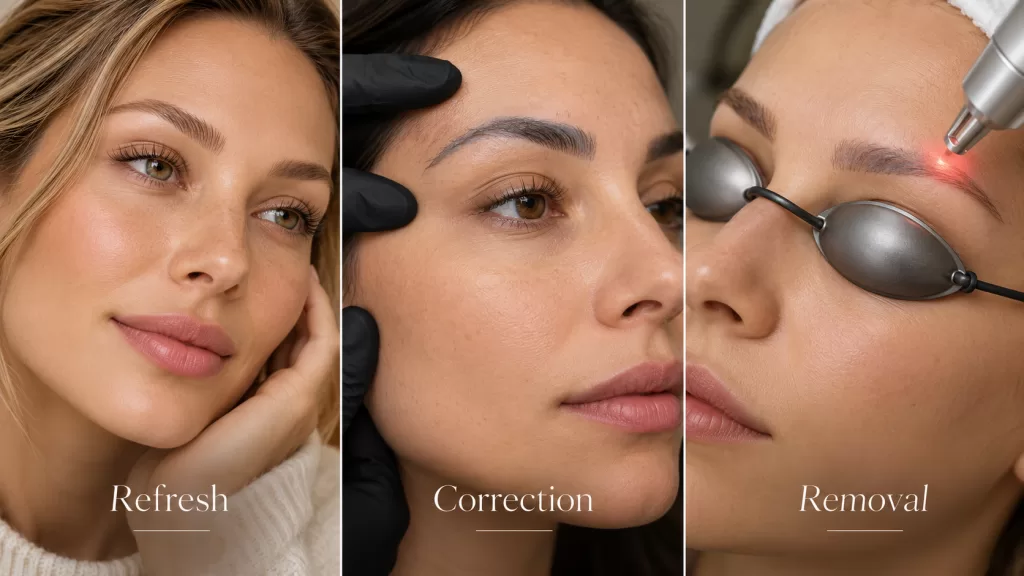
- Add or refine nano strokes when the old work is light and usable.
- Correct the existing color or shape when the pigment is still workable but needs adjustment.
- Fade or remove old pigment first when it is too dark, saturated, misplaced, or likely to interfere with the new design.
That is the decision tree.
Not:
“It has been two years, so I am ready for new brows.”
Why old microblading changes the nano brow plan
Nano hair strokes depend on something people rarely think about:
negative space.
Imagine drawing fine brown hairs onto clean skin.
Each line is visible because there is skin between the strokes.
Now imagine drawing those same fine lines over an existing brown-gray background.
The hairs may technically be there.
But visually?
They disappear.
That is the core problem with an old microblading cover-up.
New nano strokes cannot create a realistic hair effect when the canvas underneath is already heavily filled with pigment.
Your current guide on choosing between hair strokes, combo brows, and shading makes the same point: visible old pigment can limit how clean and distinct new hair strokes appear.
That is why good correction starts with evaluating the old work, not automatically covering it.
The 5 things an artist should evaluate before adding nano brows
1. How dark is the old pigment?
This is usually the first question.
If the old microblading has faded into a very soft shadow, you may have enough visual space for new strokes.
If it still looks like a filled brow without makeup, there may not be enough contrast between the skin and new strokes.
Think of it this way:
Nano strokes need somewhere to visually live.
If the entire area is already saturated, adding more detail can simply create more density.
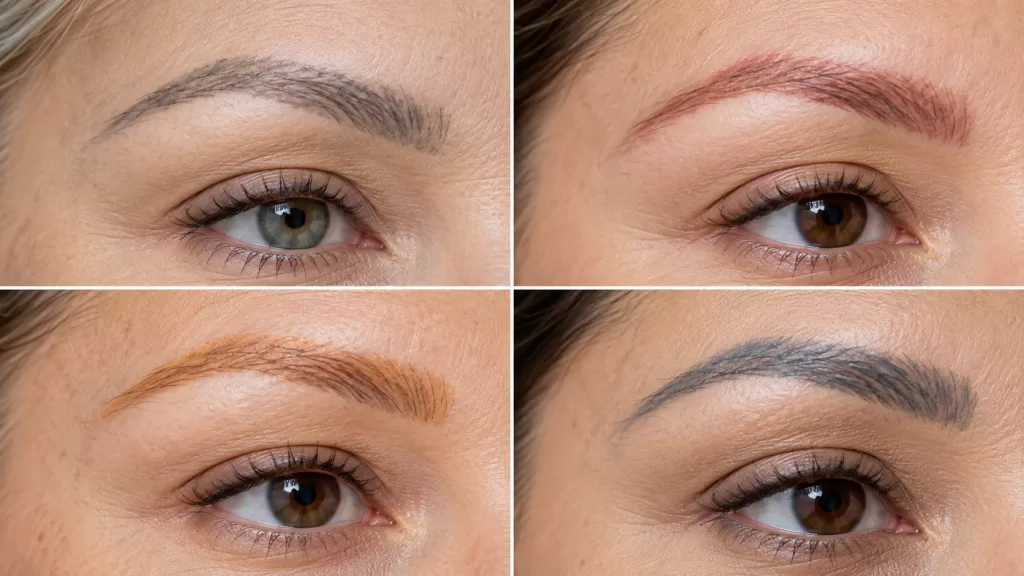
2. What color has the pigment become?
Old permanent makeup can change visually as it fades.
You might see:
- Gray
- Blue-gray
- Reddish brown
- Orange
- Warm pink
- Dull brown
- Uneven mixtures of several tones
Those colors matter because whatever you put on top must interact with what remains underneath.
Permanent makeup pigments can be difficult to remove and can behave unpredictably during correction or removal. The FDA specifically warns that cosmetic tattoos may fade, migrate, or become difficult to change later. U.S. Food and Drug Administration
3. Is the old shape still usable?
Color is only half the problem.
Maybe the pigment is light enough.
But what if:
- The tail extends too low
- The old arch sits higher than the shape you now want
- One brow begins farther inward
- The previous brows are much thicker than your current preference
- Pigment sits outside the natural brow
You cannot always “correct” unwanted shape by adding more pigment.
Sometimes the unwanted area must fade first.
4. Are the old strokes still distinct?
Old microblading does not always fade into neat individual hairs.
Over time, some work may appear softer, blurred, or more like a shadow.
That is important because layering new crisp nano strokes over a blurred base can create a mixed result:
new hair detail sitting on top of old background pigment.
For some clients that may be acceptable.
For someone wanting extremely airy, barely-there hair strokes, it may not be.
5. How healthy is the skin?
Previous permanent makeup means the area has already been worked on.
Possibly more than once.
The artist should look at:
- Texture
- Scar tissue
- Previous passes
- Skin thickness
- Existing saturation
- How many correction sessions have already been performed
The goal is not to keep depositing pigment indefinitely.
Sometimes the professional answer is:
Your skin needs less work, not more.
Situation 1: When nano brows can sometimes go directly over old microblading
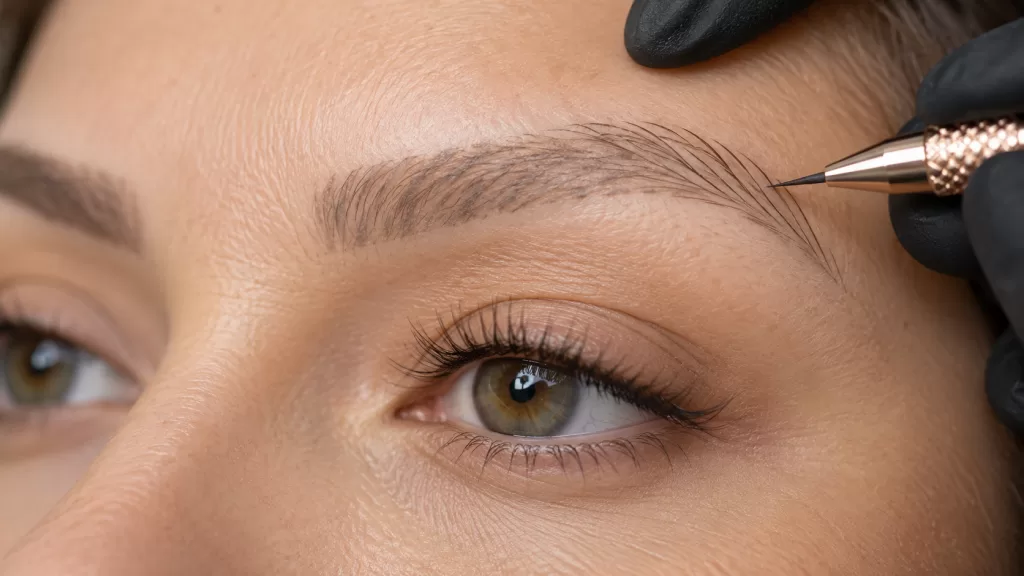
This is the easiest scenario.
Imagine your previous microblading is several years old and has faded to a light, neutral shadow.
The shape still works.
The pigment does not extend far outside the brow.
There is visible skin between the old marks.
And your artist can clearly see room for new nano hair strokes.
That may be a reasonable candidate for a nano brow correction or refresh.
A qualified artist may be able to:
- Re-map the brow
- Add new realistic hair strokes
- Reinforce sparse areas
- Rebuild a faded tail
- Balance density
- Adjust the overall tone conservatively
The key word is conservatively.
Correction should not mean covering every millimeter of old pigment simply because it exists.
If part of the previous work already supports the new design, it may be better to work with it rather than bury it under another full layer.
Situation 2: When color correction may make more sense
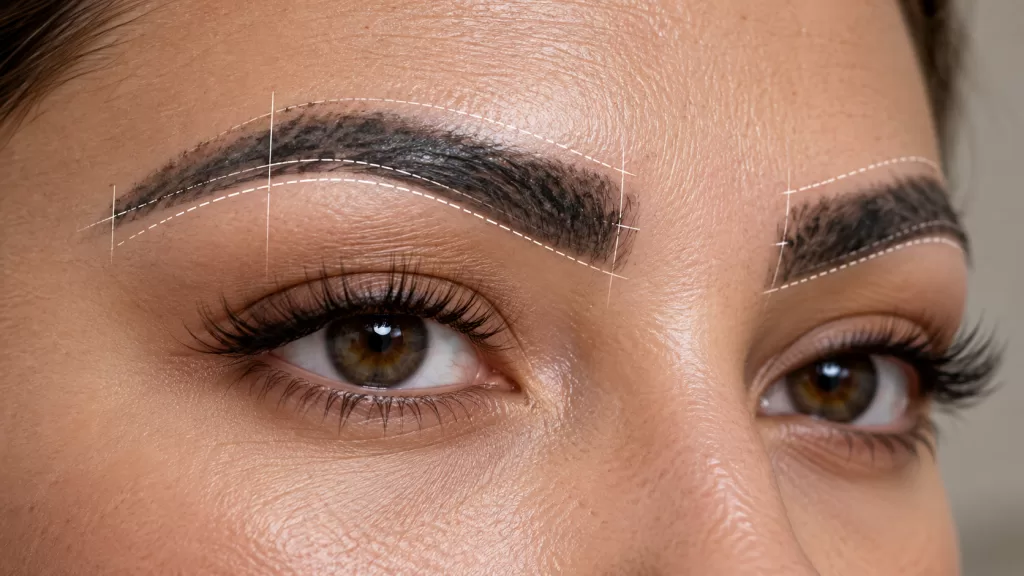
Sometimes the old shape is acceptable but the color has shifted.
Maybe it looks:
- Slightly ashy
- Too warm
- Redder than you want
- Uneven from one area to another
This is where people often search for brow color correction in Houston.
But correction is not simply:
Gray brow + warm pigment = fixed.
Permanent makeup color correction is more complex because your artist is working with pigment that already exists inside the skin.
The visible color, pigment depth, saturation, skin tone, technique, and previous correction attempts can all affect the result.
A correction may involve strategically adjusting the apparent tone while preserving the usable shape.
But there is a limit.
If the brow is already heavily saturated, continually adding corrective pigment can make it denser.
Sometimes the smarter correction is to remove some pigment before adding anything new.
What if your old microblading is gray?
Gray old brows are one of the most common reasons clients start researching correction.
There are several possible reasons cosmetic eyebrow pigment can appear cool or grayish over time, including the original pigment mixture, pigment placement, skin interaction, fading, and previous work.
What matters now is not assigning blame.
It is assessing:
How saturated is the gray?
Light gray shadow
If it is very light and the shape is good, an experienced artist may have more flexibility.
Medium gray pigment
Correction may be possible, but new hair strokes may not stand out strongly enough on their own.
Dark blue-gray or dense pigment
Adding fine strokes may create little visible improvement.
Fading or removal may deserve serious consideration first.
The darker the background, the harder it becomes to make individual nano strokes visually believable.
What if your brows faded red or orange?
This scares clients because the color can feel much more obvious than a neutral faded brown.
Again, the question is:
How much pigment remains?
A very faint warm cast may offer more correction options.
A highly saturated red or orange eyebrow is different.
Laser treatment of cosmetic eyebrow tattoos can also reveal previously hidden colors. In one clinical chart review, removal sometimes exposed underlying red, orange, yellow, green, or blue tones that were not obvious beforehand. PMC
That is why removal planning should be handled by someone who understands cosmetic tattoo pigment rather than assuming every brown behaves like ordinary black tattoo ink.
When should removal happen before new nano brows?
Removal or meaningful fading may deserve consideration when the existing brows are:
- Too dark for new strokes to remain visible
- Heavily saturated from repeated touch-ups
- Gray, blue-gray, red, orange, or otherwise strongly discolored
- Significantly outside the desired new shape
- Blurred enough that another layer would create a dense background
- Uneven in a way that cannot be corrected cleanly
- A completely different thickness from the brow you now want
This does not necessarily mean every trace of pigment must disappear.
Sometimes the goal is simply to create enough fading and visual space for the new design.
That can be very different from complete tattoo removal.
What are the removal options?
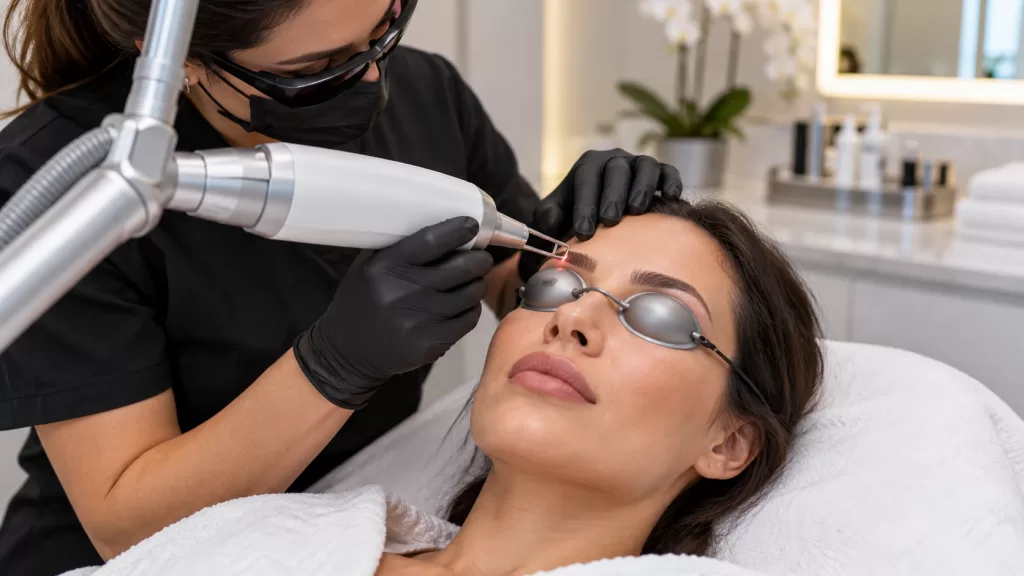
This is where the article needs restraint.
Do not choose a tattoo-removal method because someone in a Facebook group said it worked for them.
Eyebrow permanent makeup sits on the face.
Correction needs to be treated accordingly.
Laser removal
Medical literature supports laser treatment as an established option for cosmetic eyebrow tattoo pigment, but the appropriate laser and wavelength depend partly on the pigment involved.
A 2023 literature review examined 11 studies involving 129 patients treated for eyebrow cosmetic tattoo pigment and found that both Q-switched and picosecond laser systems have been used. The review reported favorable results with picosecond Nd:YAG treatment, while also noting complications such as color changes. PubMed
The FDA also warns that tattoo removal commonly requires multiple treatments and complete removal without scarring cannot always be guaranteed. U.S. Food and Drug Administration
Why cosmetic tattoo laser removal can be tricky
Cosmetic pigments may contain mixtures that behave differently under laser energy.
Some cosmetic tattoos can temporarily darken or reveal unexpected colors during treatment.
Published dermatologic literature describes paradoxical darkening with certain cosmetic pigments and notes that hidden red, orange, and yellow tones may become more visible during eyebrow tattoo removal. PubMed
That does not mean laser should be avoided.
It means:
Go to someone who understands cosmetic tattoo removal specifically.
Not someone who only removes conventional black body tattoos and assumes eyebrows behave identically.
Non-laser removal
Various non-laser approaches are also promoted within the permanent makeup industry.
Evidence, techniques, and provider qualifications vary, so I would not present one as universally superior.
If your old pigment is significant enough to require removal, get a professional evaluation and discuss:
- Your pigment color
- Skin type
- Scar risk
- Treatment history
- Expected number of sessions
- Recovery time
- The point at which enough fading has occurred for new brows
The goal is not necessarily:
Erase everything.
The goal may simply be:
Create a clean enough canvas to build a better brow.
How many sessions does old microblading correction take?
There is no honest universal number.
And if somebody gives you one after looking at a selfie for twelve seconds, treat that estimate cautiously.
Correction time depends on whether you need:
- Direct nano brow refinement
- Color correction
- Partial fading
- Full removal
- Several removal sessions before new permanent makeup
- A combination of those steps
Laser studies demonstrate the variability well.
A retrospective study involving cosmetic eyebrow and eyeliner tattoos reported an average of 2.8 laser treatments, but individual cases differed and pigment colors sometimes changed during treatment. PMC
The FDA gives broader tattoo-removal guidance noting that removal can require several treatments and may not always achieve complete clearance. U.S. Food and Drug Administration
So instead of asking:
“How many sessions will I need?”
start with:
“Which stage am I actually in?”
Because a light, faded brow might need a very different plan from a dark eyebrow that has been tattooed five times.
Can you just cover old microblading with darker nano brows?
Technically, more pigment can make something darker.
That does not mean it makes it better.
If your goal is natural nano hair strokes, darkening the entire area to hide old pigment can move you in the opposite direction.
You may end up with:
- Less visible separation between strokes
- Greater saturation
- Heavier brows
- Fewer future correction options
Remember the business deal you are trying to make with your eyebrows:
less maintenance, not more problems.
Cover-up should never be shorthand for “keep adding pigment until the old work disappears.”
When combo brows or shading may work better than pure nano strokes
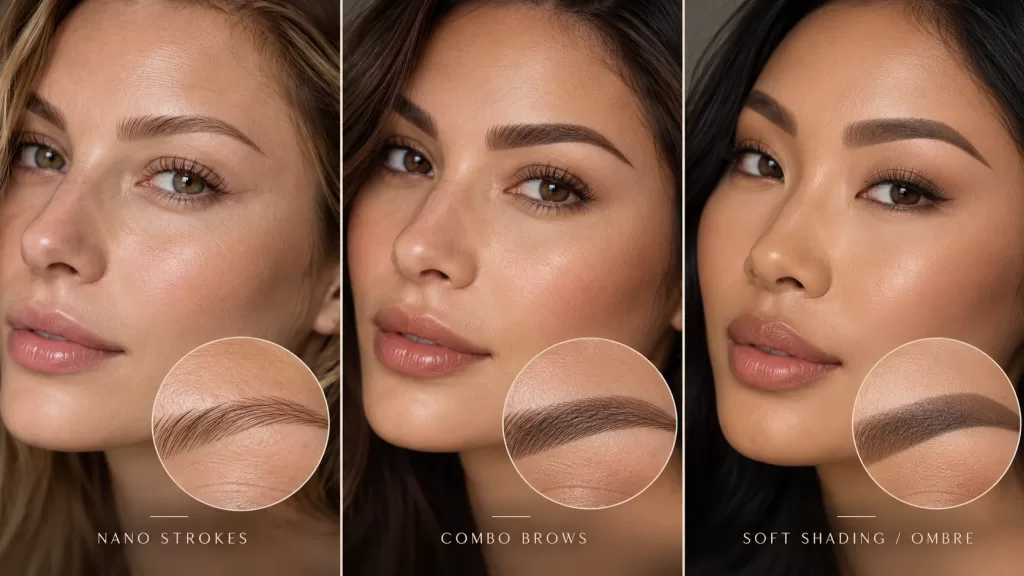
There is another option that clients sometimes overlook.
Maybe your old pigment is light enough to work with but not clean enough for pure hair strokes to look perfect.
In that case, your artist may consider:
- Nano hair strokes plus soft shading
- Combo brows
- A softly shaded design rather than trying to force visible strokes everywhere
This is where your existing Hair Strokes vs Combo vs Shading guide becomes an excellent internal link.
The right question is not:
“Can I still have nano brows?”
It is:
“Which technique will look most natural on top of what is currently there?”
That subtle change in question can save you from chasing a procedure that does not suit the canvas.
What results are realistic after old microblading correction?
This depends heavily on your starting point.
But here is the mindset I would use.
If the old pigment is light and well positioned
A very natural-looking nano refresh may be realistic.
If the color is mildly off but the shape works
A correction strategy may improve the appearance significantly.
If the old work is dark or saturated
You may need fading before a soft hair-stroke result becomes realistic.
If the shape is far outside your new desired brow
Correction may require multiple stages.
If there are multiple old layers
Perfectly untouched-looking skin may not be a realistic promise.
The best correction artists manage expectations before treatment.
They do not show you someone else’s perfect virgin-skin result and imply your five-year correction journey will look identical.
Do not judge correction work by fresh photos
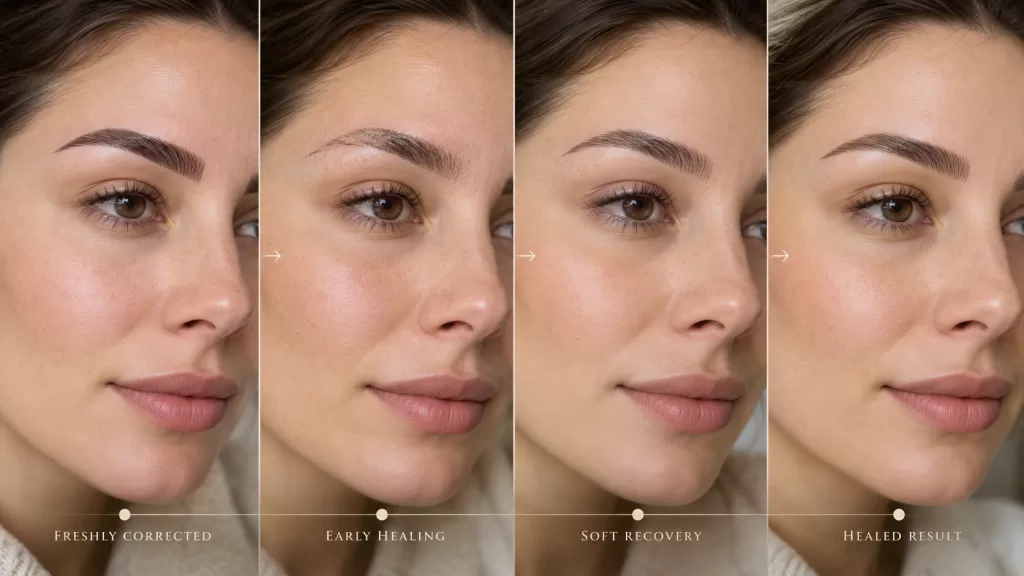
This matters almost more with corrections than with first-time nano brows.
Fresh pigment can temporarily hide what is underneath.
The real test is what happens after healing.
Ask your artist to show:
healed correction cases.
Especially clients who started with:
- Gray brows
- Red brows
- Old microblading
- Saturated pigment
- Uneven shapes
Fresh correction photos show artistic potential.
Healed correction photos show reality.
Houston-specific advice before scheduling correction
If you are planning old microblading correction in Houston, timing matters.
Correction may involve:
- Removal appointments
- Healing between procedures
- Brow correction
- A new PMU session
- A later perfecting appointment
Do not plan this entire process immediately before:
- A wedding
- Important professional photographs
- A long sunny vacation
- Pool season travel
- An event where you cannot tolerate temporary redness or peeling
Houston heat and sweat also matter during healing.
Your aftercare routine needs to fit your actual lifestyle, not the fantasy version where you suddenly stop sweating in July.
The question I would ask your artist before anything is done

Ask this:
“If you were not trying to sell me a service today, what would you do with these brows?”
That question is powerful.
Because the best answer may be:
“Your old work is light enough. We can work with it.”
Or:
“I would correct the color first.”
Or:
“I would fade this before adding any more pigment.”
Or even:
“I would leave it alone for now.”
You want the artist who is willing to delay the sale to protect the result.
Frequently Asked Questions
Can nano brows go over old microblading?
Sometimes. If the old microblading is light, faded, inside the desired new shape, and leaves enough visible skin for new hair strokes, nano brows may be possible. Dark, saturated, blurred, or misplaced pigment may need correction or fading first.
When is removal needed before nano brows?
Removal may be considered when old pigment is too dark, heavily saturated, significantly discolored, outside the desired shape, or dense enough that new nano hair strokes would not remain visually distinct.
What if my old microblading is gray or red?
Gray, red, orange, or other color shifts should be evaluated in person. Mild residual color may sometimes be corrected, while strong saturation may need fading before new permanent makeup is added.
How many sessions does microblading correction take?
There is no fixed number. A lightly faded brow may require a new correction session and later touch-up, while heavily saturated brows may need several removal or fading sessions before new permanent makeup can be considered.
Can laser remove old microblading completely?
Laser can significantly reduce cosmetic eyebrow pigment, but complete removal is not guaranteed. Multiple treatments may be required, and pigment can sometimes reveal unexpected colors or darken temporarily during treatment. PubMed
Can I cover gray microblading with a darker brown?
Adding darker pigment may sometimes camouflage old color temporarily, but repeatedly layering pigment can increase saturation and reduce the natural appearance of future hair strokes. An in-person assessment should determine whether correction, fading, or another technique is more appropriate.
Can nano brows fix botched microblading?
They can improve some cases, but nano brows cannot automatically erase poor shape, dense pigment, or badly positioned old work. Significant problems may require correction or removal before a new brow design is created.
Are combo brows better over old microblading?
Sometimes. If the old pigment is light but creates enough background color that individual nano strokes alone would not look clean, a combination of hair strokes and soft shading may provide better visual balance.
Sometimes the fastest way to better brows is to stop adding pigment
That is the part nobody wants to hear when they are ready for a transformation.
You finally found the soft nano hair strokes you wanted.
You are ready to fix the old brows.
And then somebody tells you:
Wait. Fade first.
That can feel disappointing.
But permanent makeup is one of those situations where trying to save three months can create three years of extra problems.
If the old microblading is light and usable, fantastic.
Work with it.
If the color needs a small correction, build a plan.
If the brow is dark, blurred, saturated, or outside the shape you now want, give yourself permission to create a cleaner canvas first.
The goal is not to complete the procedure as quickly as possible.
The goal is to look at your healed brows six months later and be glad you did not rush.
If you have old microblading in Houston and are considering nano hair strokes, bring clear photos of your brows, disclose previous correction or removal sessions, and schedule an in-person consultation before choosing a procedure.
The right correction plan begins with what is already in your skin, not what you wish was there.
