
You probably know the exact brow look you do not want.
Perfect rectangles.
Identical arches.
Dark square fronts.
Every hair pointing in the same direction like they showed up for military inspection.
Brows that photograph beautifully under a ring light but walk into the room five seconds before the rest of your face.
And that fear makes sense.
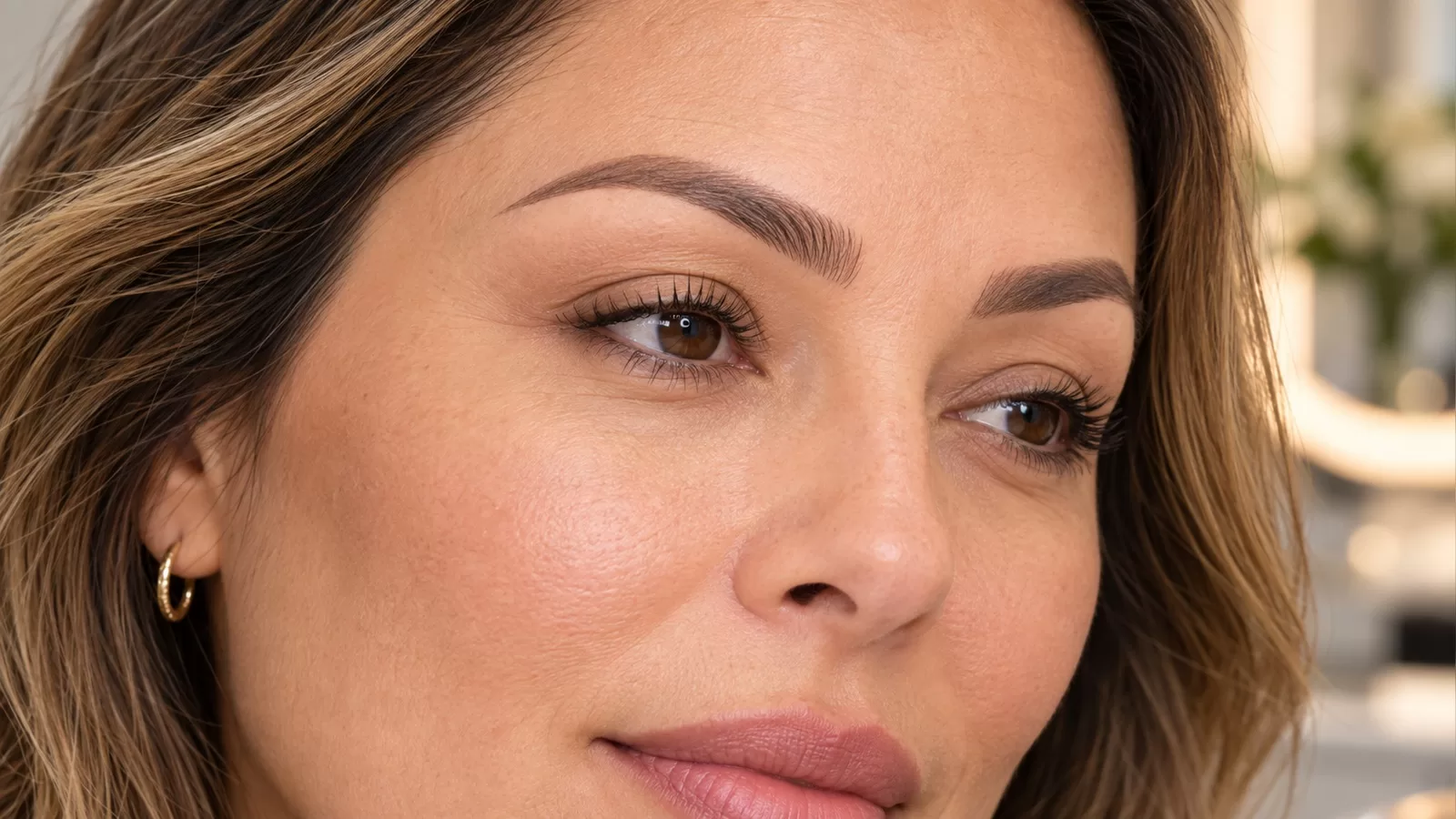
When someone searches for natural-looking nano brows, they are usually not trying to buy “more eyebrow.”
They are trying to solve a quieter problem:
“I want my brows better, but I do not want people to know I had them done.”
That is a completely different goal from bold cosmetic definition.
It requires restraint.
Good mapping.
Good pigment judgment.
Realistic hair-stroke direction.
Negative space.
And, perhaps most importantly, an artist who understands that the best brow does not need to prove how technically impressive it is.
It needs to belong on your face.
If you are considering nano hair stroke brows in Houston, use this checklist before you approve the shape, color, or design.
Because natural is not something an artist can add at the end.
Natural has to be built into the plan from the beginning.
Quick answer: What makes nano brows look natural?
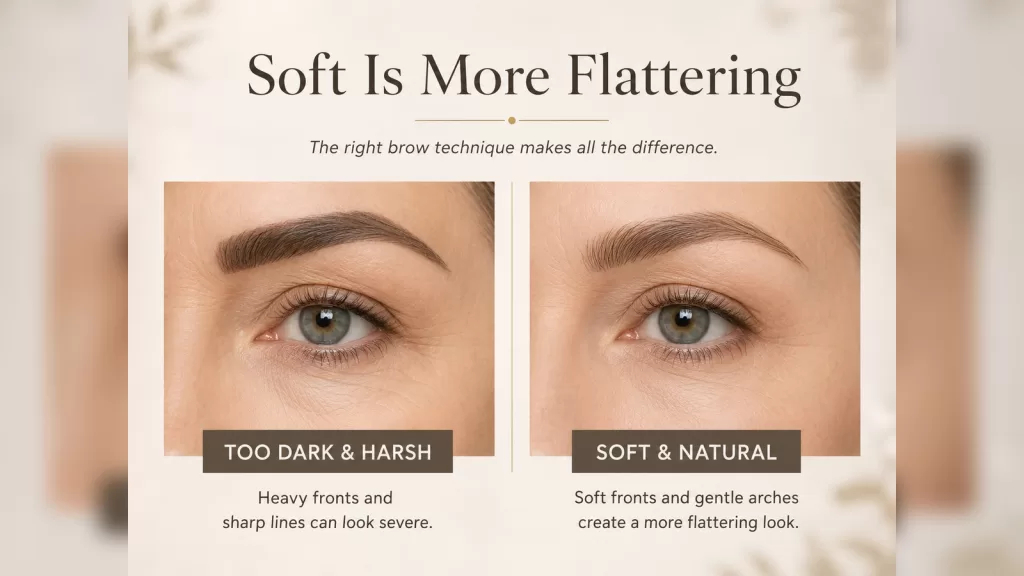
Natural-looking nano brows usually share five qualities:
- The fronts stay soft rather than square and dense
- Hair strokes follow believable growth patterns
- The shape works with your existing brow and facial structure
- There is visible skin between strokes
- The pigment supports your natural brow hairs instead of overpowering them
The Nano Blading’s current Nano Hair Stroke service is specifically positioned around creating hair-like detail rather than a dark or artificial filled effect. The Nano Blading
But technique name alone does not guarantee that result.
A nano machine can still produce brows that look too dense.
A technically perfect hair stroke can still be placed in the wrong direction.
A beautifully symmetrical brow can still look wrong on an asymmetric face.
That is why this article is a checklist, not a promise.
1. Start with the sentence: “I want people to notice my face, not my brows.”
This may be the most useful thing you can tell your artist.
Do not walk in and simply say:
“I want natural brows.”
“Natural” means wildly different things to different people.
One client means:
barely there.
Another means:
full but realistic.
Another means:
Instagram brows, but slightly less obvious.
Be more specific.
Tell your artist:
- I want visible skin between the strokes.
- I do not want a square front.
- I do not want every stroke packed tightly together.
- I want my existing brow hairs to stay part of the design.
- I want them to look believable without makeup.
- I would rather heal slightly soft than look too dark.
That immediately gives the consultation direction.
The easiest script to use
Say:
“I want people to think I naturally have good brows. I do not want them to notice the permanent makeup first.”
That is much more useful than handing over one filtered Instagram screenshot.
2. Your brow front should whisper, not announce itself
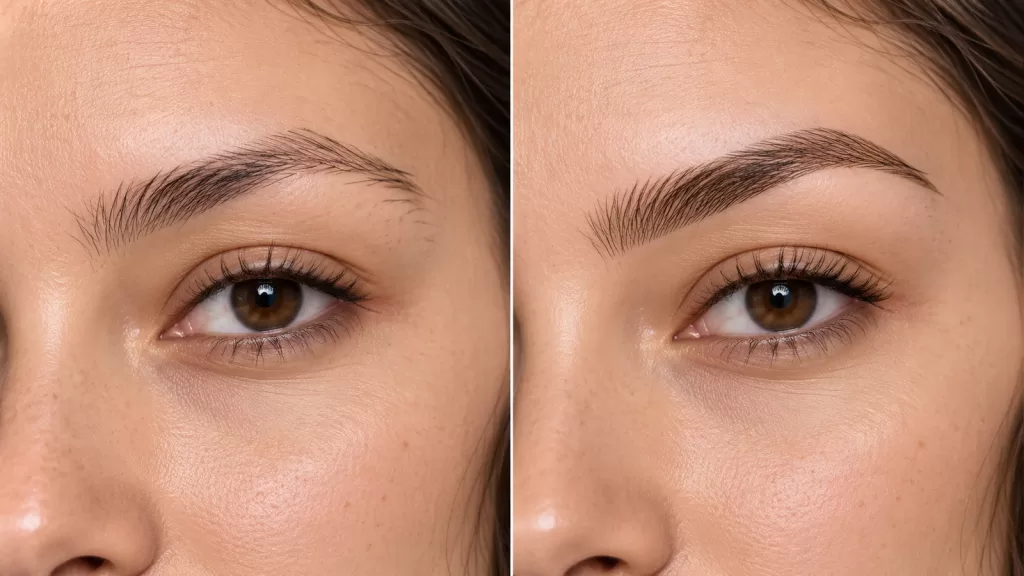
If there is one area that can turn a soft brow into a heavy one quickly, it is the front.
Natural eyebrow hairs usually do not begin as a dense vertical wall.
They tend to be:
- lighter
- less dense
- more irregular
- more upward-growing
- separated by visible skin
That is why soft front brows are such an important part of natural-looking permanent makeup.
A believable brow front should transition gradually into the body of the brow.
It should not look as though somebody drew a straight line down the side of your nose and filled everything behind it.
What should you ask for?
Ask for:
“A soft, airy front with visible skin.”
Or:
“Please do not make the front as dense as the arch and tail.”
Tiny sentence.
Huge difference.
3. Do not chase perfect symmetry
This is where social-media beauty standards can quietly create unnatural results.
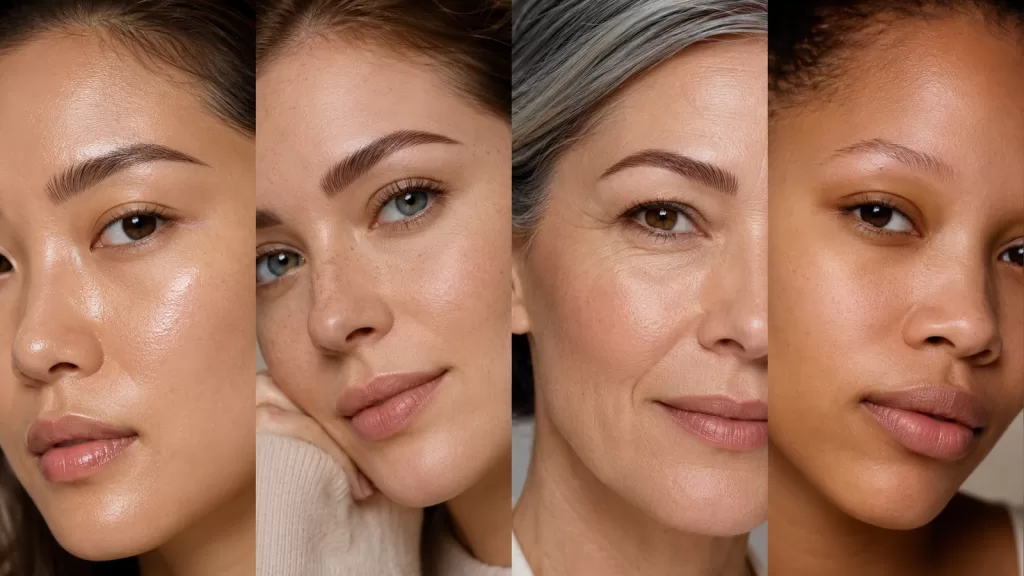
Faces are not perfectly symmetrical.
Neither are eyebrows.
In one clinical study of 133 patients, brow asymmetry was observed in 88 percent of them. PubMed Another study found that small degrees of facial and orbital asymmetry did not necessarily reduce perceived attractiveness. PubMed
That matters.
Because permanent makeup should create balance, not force two naturally different sides of your face into geometric clones.
Imagine your left brow naturally sits slightly higher because of your facial muscles.
Making the tattooed shapes mathematically identical does not necessarily make the face look more balanced.
It can sometimes highlight the difference.
Better question
Do not ask:
“Are my brows exactly the same?”
Ask:
“Do they look balanced when my whole face is viewed normally?”
That is a much more useful standard.
4. Brow mapping should follow your face, not a universal stencil
There is no one “perfect brow.”
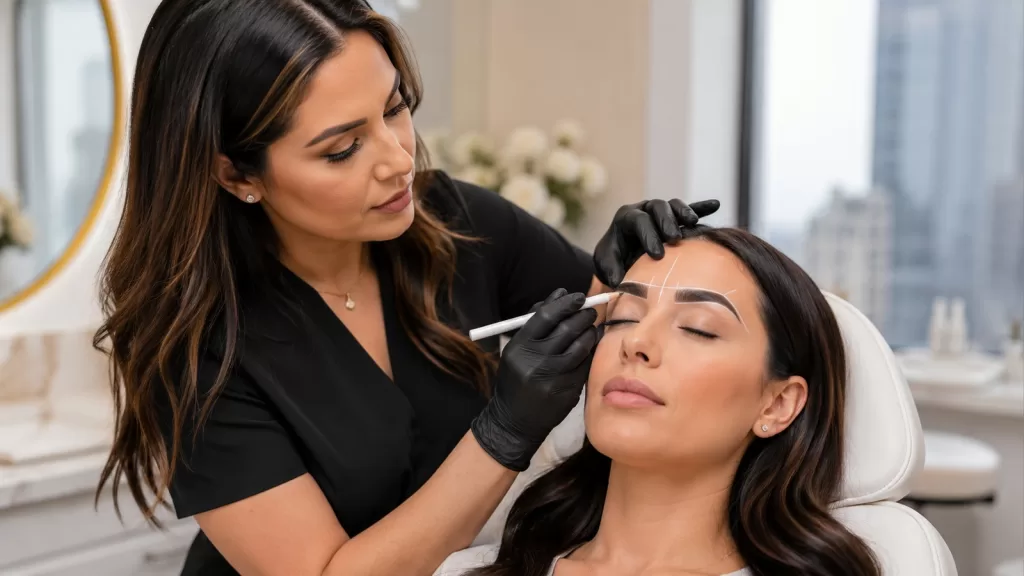
Research comparing brow shapes across different facial forms found that brow design can influence perceived facial aesthetics and that modified shapes sometimes performed better than applying one classic brow formula to everybody. PubMed
That supports what good brow artists already understand:
Context matters.
Your ideal brow depends on things such as:
- Existing brow growth
- Brow bone
- Eye placement
- Facial proportions
- Forehead
- Natural arch
- Brow muscle movement
- Desired expression
A round face does not necessarily need the same brow design as a long face.
And the brow that looks beautiful on the influencer whose screenshot you saved may look completely different on you.
This is why brow mapping should be customized rather than copied.
5. Your arch should look discovered, not invented
People often walk into brow appointments thinking:
“I need a stronger arch.”
Maybe.
But more arch is not automatically more flattering.
A dramatic arch can change the emotional expression of the face.
Too high can feel surprised.
Too sharp can feel severe.
Too low can feel heavy.
A natural arch usually feels as if the artist found the strongest version of something your brow was already trying to do.
Not as if they installed a completely different eyebrow.
How do you choose the right arch?
Look at:
- Where your natural hair changes direction
- Your brow bone
- Existing peak
- Facial proportions
- How the brow moves when you talk
And evaluate the design while sitting normally, not only while lying flat.
Your eyebrows are going to live on a moving face.
Design them for one.
6. Realistic hair strokes should not all look identical
Real eyebrow hairs are messy in a very organized way.
Some grow upward.
Some grow diagonally.
Some cross slightly.
Some are thin.
Some appear darker.
Spacing changes.
That irregularity creates realism.
So if your permanent makeup portfolio shows every stroke:
- identical length
- identical spacing
- identical angle
- identical darkness
the result may look drawn rather than grown.
Your site’s Nano Hair Stroke Brow service is intended to mimic individual natural hairs. The Nano Blading The illusion becomes stronger when those strokes behave like actual hairs rather than repeated graphic lines.
Ask to see close-ups
Look specifically at:
- stroke direction
- spacing
- transitions
- fronts
- tails
- healed detail
Not only the full-face glamour shot.
7. Negative space is part of the brow
This point is underrated.
People assume fuller brows require more pigment.
Sometimes fuller-looking brows need better placement.
Hair-stroke brows rely on visible skin between strokes.
That negative space gives the eye enough contrast to interpret individual strokes as hairs.
Pack too many strokes together and you can eventually create something closer to a shaded area.
Then the illusion disappears.
Think of a forest.
You notice individual trees because there is space between them.
Turn everything into one solid green wall and you no longer see trees.
Nano brows work on the same visual principle.
Ask your artist:
“Will there still be visible skin between my healed strokes?”
Good question.
Especially if your biggest fear is blocky brows.
8. Color should blend with the brow, not compete with it
Natural-looking shape with the wrong pigment can still look artificial.
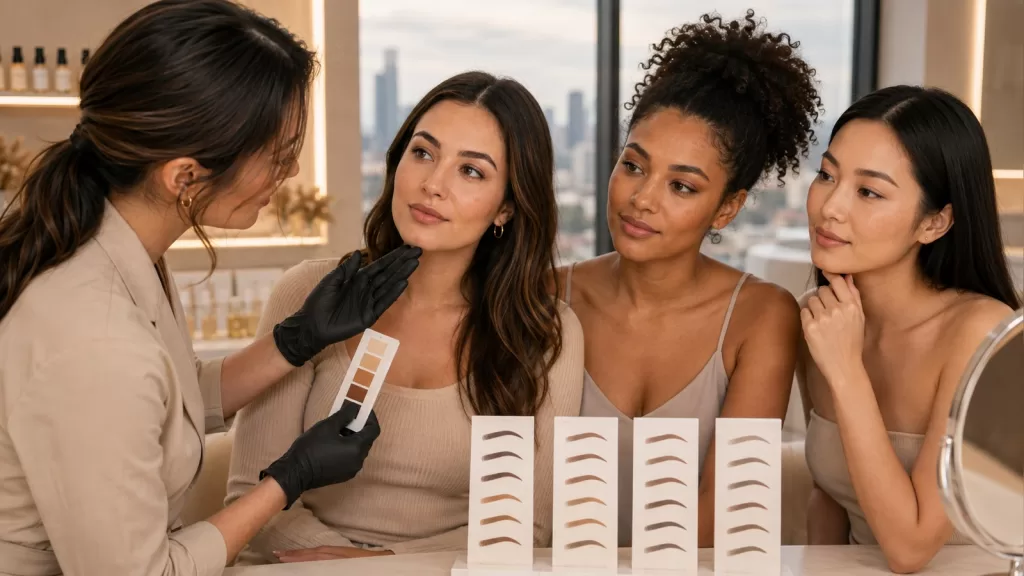
Your natural brow hair is often more useful for color planning than blindly matching whatever shade your scalp hair is today.
The pigment needs to work with:
- Natural hair depth
- Skin undertone
- Existing brow density
- Desired contrast
- Technique
- Previous permanent makeup
You already have a dedicated Nano Brow Color Guide, so this blog should internally link there rather than repeat the entire pigment lesson.
But the quick rule is:
Do not choose the darkest shade simply because you want “definition.”
Definition can also come from:
- shape
- density
- placement
- shading
- structure
Color is only one lever.
9. Judge healed brows, not five-minute-old brows
This is one of the most useful filters when choosing an artist.
Fresh permanent makeup photographs beautifully.
Everything is:
- crisp
- dark
- defined
- freshly cleaned
- perfectly lit
But you are not purchasing a day-one Instagram photograph.
You are purchasing the healed result.
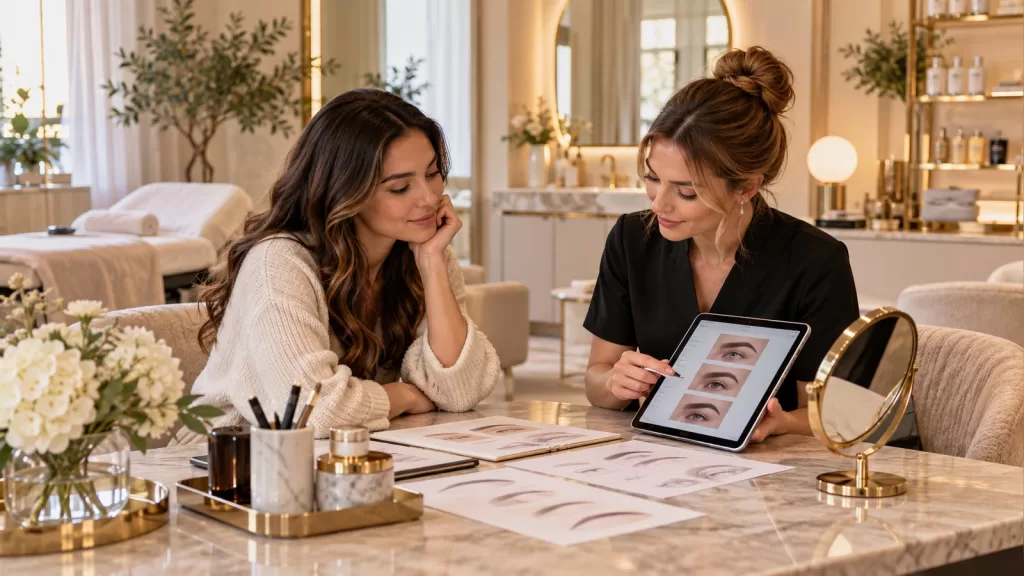
Your current artist-selection guide makes this point clearly: healed work shows whether the color softened naturally, stroke patterns remained believable, and the design still worked once the skin recovered. The Nano Blading
Ask:
“Can I see healed nano hair stroke brows on clients with skin similar to mine?”
That question is worth far more than scrolling through fifty fresh photos.
10. Do not pick a brow because it looks good in one photograph
This is the “Instagram brow” trap.
Photography changes things.
Ring lights flatten shadows.
Makeup adds balance.
Skin filters reduce texture.
Angles change symmetry.
Brows that look dramatic and beautifully defined in a tightly cropped photograph can feel much stronger in real life.
So look at portfolio images from:
- multiple distances
- normal lighting
- full face
- close up
- healed appointments
The question is not:
“Does this look impressive when zoomed in?”
The question is:
“Would this still look believable while I am buying groceries at 10 a.m. with no makeup?”
That test destroys a lot of bad decisions quickly.
11. Choose the amount of definition based on your real life
Natural does not mean everyone should have the same subtle brow.
A bride who normally wears full makeup may want a stronger healed base.
A corporate professional who rarely wears makeup may want much softer strokes.
Someone who fills the entire brow every morning may feel that pure hair strokes are too understated.
This is why your technique guide compares nano hair strokes, combo brows, and shading rather than claiming one is universally best. The Nano Blading
Think about your average Tuesday
Not your wedding.
Not your vacation.
Not your heavily edited engagement shoot.
Your average Tuesday.
How do you normally look?
That should drive the permanent base.
You can always add makeup for special occasions.
12. Natural brows should leave you room to change your mind later
Permanent makeup lasts long enough that fashion matters.
Today you might love:
- thick brows
- lifted arches
- strong tails
Five years from now?
Maybe not.
That is another reason conservative design wins.
You can always:
- add pencil
- add powder
- deepen definition
- intensify makeup temporarily
Removing unnecessary tattooed density is much harder.
So when stuck between:
slightly softer
and
slightly stronger
I would generally rather begin conservatively and evaluate the healed result.
The best permanent makeup gives your future self options.
The Natural Brow Checklist
Before approving the design, run through this list.
Shape
- Does this shape still resemble my natural eyebrow?
- Does the arch suit my face rather than a trend?
- Are we balancing asymmetry instead of forcing perfect symmetry?
- Is the tail positioned naturally?
Front
- Is the front softer than the rest?
- Can I see skin?
- Are the strokes moving upward naturally?
- Does it avoid a square or boxed beginning?
Hair strokes
- Are the strokes different lengths and directions?
- Do they follow believable hair growth?
- Is there negative space between them?
- Are we avoiding overcrowding?
Color
- Does the pigment work with my natural brow hairs?
- Is it conservative enough for the healed result?
- Have we considered previous pigment?
Lifestyle
- Does this brow fit how I look most days?
- Can I add makeup later when I want more definition?
If you can answer yes to those questions, you are moving toward a much safer definition of “natural.”
Natural brows for brides: photograph beautifully without looking painted on
Brides have a unique problem.
You want brows strong enough to survive:
- professional photography
- distance
- makeup
- bright lighting
But your wedding photos are permanent too.
The safest strategy is usually not tattooing a dramatic wedding-day brow onto your face months earlier.
Build a natural permanent base.
Then let your makeup artist create the extra wedding-day definition with temporary products.
That means after the honeymoon you are not waking up every morning wearing your bridal makeup intensity.
Permanent makeup should support the event.
Not become the event.
Natural brows for professionals: polished without looking “done”
For someone going into an office, hospital, classroom, court, meeting room, or client call every day, subtlety has enormous value.
The ideal result is:
You look rested and polished before doing anything.
Not:
Everybody knows you got your eyebrows tattooed.
Soft-front nano brows can create enough structure that the face looks more balanced even on days when you wear almost nothing else.
That is the kind of convenience permanent makeup should buy you.
What makes brows look fake?
Usually not one thing.
It is the combination.
Common causes include:
- Square, dense fronts
- Pigment much darker than surrounding hair
- Overly sharp outlines
- Identical stroke patterns
- Excessive density
- An arch disconnected from the natural brow
- Perfect mirror-image symmetry forced onto an asymmetric face
- A tail that sits too low or extends too far
- A style chosen for a photograph instead of everyday life
Any one of those might still be workable.
Stack several together?
Now your brows are introducing themselves before you do.
Can natural nano brows still look polished?
Absolutely.
Natural does not mean unfinished.
A beautifully designed nano brow can still:
- clarify the arch
- rebuild a missing tail
- fill sparse areas
- create greater symmetry
- visually lift the eye area
- reduce your morning makeup routine
Your homepage currently describes nano hairstrokes as creating softer, fuller brows while maintaining an effortless look, which is exactly the positioning this informational article should reinforce rather than duplicate. The Nano Blading
The goal is controlled improvement.
Not visual domination.
Frequently Asked Questions
How do I ask for natural-looking brows?
Be specific. Ask for a soft front, visible skin between strokes, realistic hair direction, conservative density, and a shape that works with your existing brow rather than replacing it. Bringing reference photos can help, but explain what you like about each image rather than asking the artist to copy someone else’s brows exactly.
What makes permanent brows look fake?
Common causes include overly dark pigment, boxed fronts, dense stroke placement, overly sharp outlines, identical hair-stroke patterns, excessive symmetry, and brow shapes that do not fit the client’s natural facial proportions.
What is a soft brow front?
A soft brow front has lower density and more visible skin than the body and tail of the brow. Hair strokes generally transition upward and outward rather than creating a solid vertical edge.
How do you choose the right brow arch?
The arch should be selected using your existing hair growth, brow bone, facial proportions, natural brow movement, and overall balance. There is no single ideal arch that works for every face.
Can I still wear makeup over nano brows later?
Once your brows are fully healed and your artist has cleared you to resume normal makeup, you can generally use brow products to temporarily add more intensity or definition. This is one reason beginning with a softer permanent design can be useful.
Natural-looking brows are not about doing less. They are about knowing where to stop.
That is the skill.
Anybody can keep adding:
another stroke.
another line.
another millimeter of thickness.
another layer of pigment.
The difficult part is recognizing when your face already has enough.
Your eyebrows should not become a separate design project floating above your eyes.
They should connect:
your hair.
your eyes.
your bone structure.
your expression.
your existing brow.
When everything works together, the result becomes strangely difficult to identify.
You simply look better.
That is what natural-looking nano brows should do.
If you are considering nano hair stroke brows in Houston, do not ask your artist only:
“Can you make these fuller?”
Ask:
“How will you make these look like they were always mine?”
That question changes the entire consultation.
At The Nano Blading, the Nano Hair Stroke Brow service focuses on realistic hair-like detail for clients looking to add volume and definition without a dark or artificial result. The Nano Blading
Book a free consultation and bring this checklist with you. Decide on the shape, front, density, stroke pattern, and color before permanent pigment goes into your skin.
