
There is one question I wish more people asked before getting ombré brows.
Not: “Which brow shape is trending?”
Not: “How dark can you make them?”
And definitely not: “Can you make mine look exactly like this woman’s brows?”
The better question is: “How much brow do I actually want to wake up with every morning?”
Because there is a huge difference between wanting your eyebrows to look gently polished and wanting them to look completely finished before you apply a single drop of makeup. Both are valid. The problem starts when your permanent brow intensity does not match the way you actually live.
Maybe you save a glamorous ombré brow photo because it looks incredible under professional lighting. But most mornings, you wear tinted moisturizer and mascara. Or perhaps you ask for the lightest possible shading because you are afraid of looking “tattooed,” even though you have filled your brows dark and defined every day for the last eight years.
Neither decision is really about your face. It is about fear. One fear says: “What if they are too much?” The other says: “What if I pay for this and they still do not feel finished?”
That is why choosing ombré brow intensity deserves its own conversation. If you are considering nano ombré brows in Houston, here is how to decide whether your finished look should be barely there, soft, defined, or more glamorous without relying on trends that may have nothing to do with you.
Quick answer: How dark should ombré brows be?
Your ombré brows should be intense enough to give you the definition you want on an ordinary day, but soft enough that they still work when you are wearing little or no makeup.
A useful starting scale is:
| Brow intensity | Best described as | Often suits someone who |
|---|---|---|
| Barely there | Soft shadow and subtle structure | Rarely fills brows or wants minimal PMU visibility |
| Soft natural | Polished but understated | Wants everyday definition without a makeup-heavy effect |
| Defined | Clearly filled and structured | Normally uses pencil, powder, or brow makeup |
| Glam | Stronger makeup-like definition | Consistently wears polished or full makeup |
These are descriptive starting points, not standardized treatment settings. There is no universally “best” level. The correct intensity is the one that still feels like your face when you are not dressed for an event.
First, shade and intensity are not the same thing
This distinction will save you a lot of confusion during your consultation.
Shade refers to color. Think lighter brown, medium brown, deeper brown, warmer tone, cooler tone, or more neutral tone.
Intensity refers more to how visually strong or saturated the finished brow appears. You can have a medium-brown pigment applied softly. You can also have that general color family appear much more defined because of density, saturation, shape, and technique.
That means asking, “What color are you using?” does not tell you everything about how bold the brows will look. The better conversation includes pigment color, density, front softness, edge definition, gradient, overall saturation, and how much natural brow hair you already have.
Think of watercolor versus a marker. The color could technically be similar. The visual impact is completely different. For more on pigment selection, see our nano brow color guide.
Level 1: Barely-there ombré brows
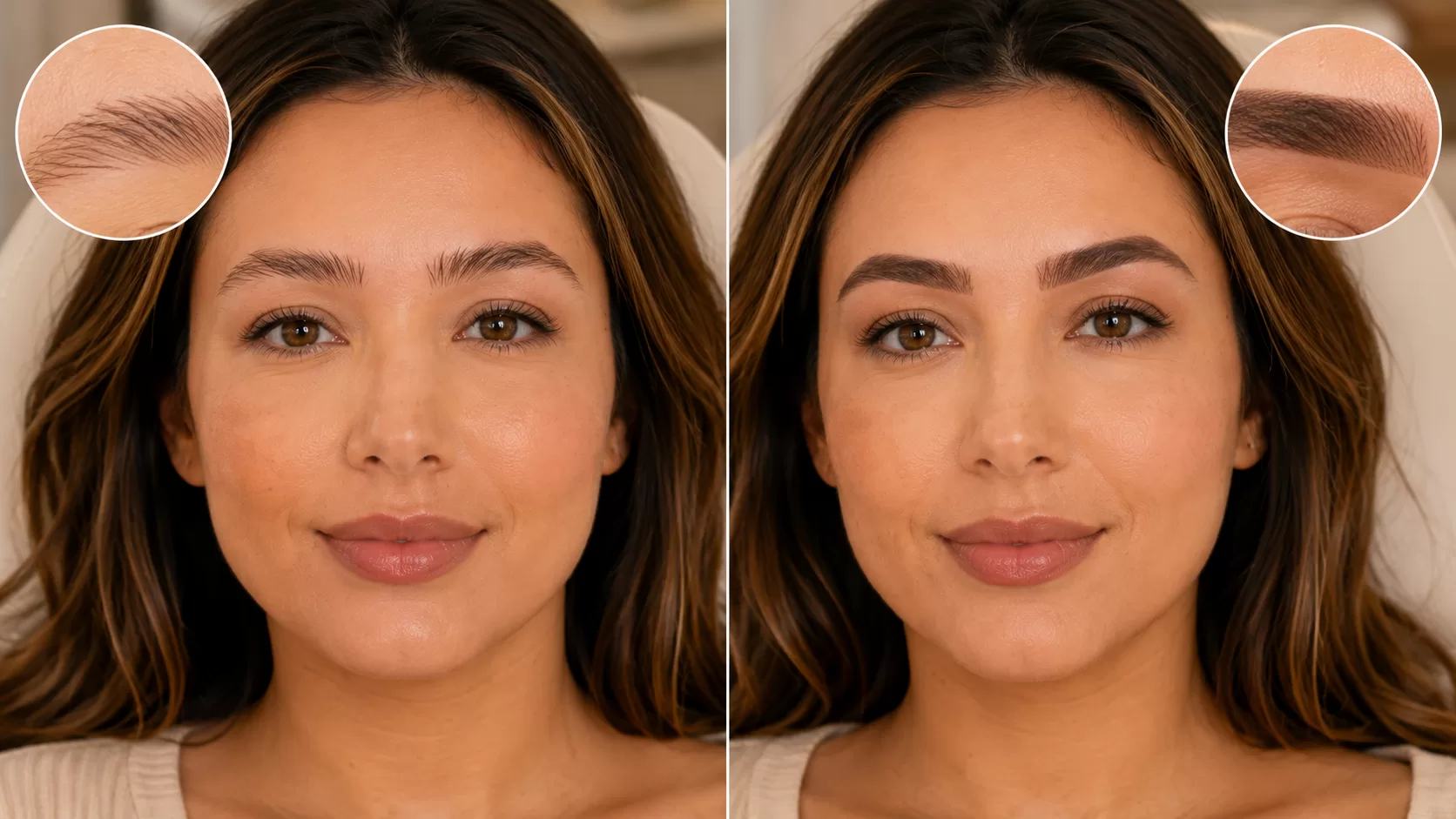
This is the client who says: “I want my brows better, but I almost do not want to see the permanent makeup.”
You may be drawn to this level if you:
- Rarely wear brow makeup
- Prefer very light everyday makeup
- Already have a decent amount of natural brow hair
- Mainly want a little more shape or density
- Are nervous about brows looking too “done”
- Want maximum flexibility to add makeup later
A barely-there result should not mean unfinished. It means restrained. The shading acts more like a quiet background behind your own brow hairs. You still see texture. You still see skin. You still look like yourself, just more balanced.
The advantage
You have flexibility. Once the skin has healed and your artist clears makeup use, makeup can create more intensity for dinner, photographs, or an event.
The tradeoff
If you normally love polished brows, this intensity may leave you feeling as though you still need brow makeup every morning. That is why “natural” is not automatically the best choice. Natural only works when it matches what you consider finished.
Level 2: Soft natural ombré brows
For many clients, this is the sweet spot. A soft powder brow creates visible shape and density but does not dominate the face. The front stays lighter. Definition builds through the body. The tail can appear more finished. But the entire brow should still feel integrated into your natural features.
This level may appeal to you if you want cleaner shape, more even density, less morning makeup, a soft front, a polished tail, and brows that work with both makeup and a bare face.
The emotional payoff here is simple. You wake up and your brows already make sense. You are not staring at one sparse tail thinking: “Fine. Where did I put the pencil?”
Level 3: Defined ombré brows
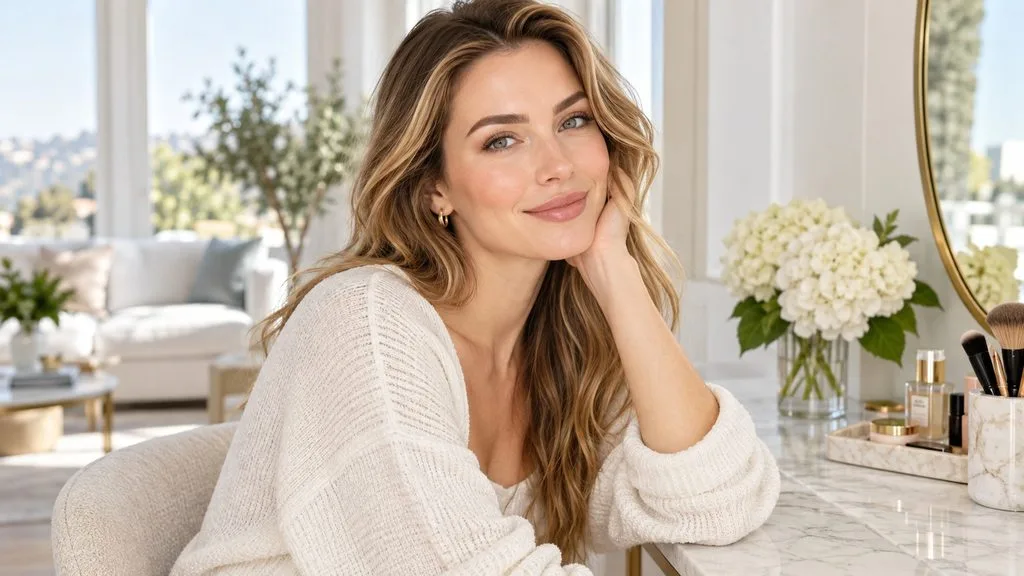
Defined does not automatically mean harsh. This is where people often confuse visible with unnatural. A defined brow can still be beautifully designed. The difference is that the makeup effect is intentional.
You may prefer a more defined ombré brow if you:
- Fill your brows daily
- Prefer a polished look
- Want your arch clearly visible
- Want stronger tail definition
- Wear makeup regularly
- Dislike the look of very soft brows on yourself
This level often makes sense for someone who already knows exactly how she likes her brows. You have probably been drawing them the same way for years. You are not trying to discover a new identity. You are trying to stop recreating it every morning. That is an entirely reasonable reason to choose permanent makeup.
Level 4: Glam ombré brows
Then there is glam. Stronger. More structured. More obviously finished. A glam ombré brow can suit someone whose everyday beauty style already supports it. The key phrase is already supports it.
If you regularly wear full foundation, lashes, eyeliner, contour, a polished lip, and clearly filled brows, very soft permanent brows may feel disconnected from the rest of your face. A stronger brow base may make more sense.
But this is where restraint matters most. Permanent makeup is not the same as tonight’s brow pencil. You can wash tonight’s makeup off. You cannot make permanent pigment disappear tomorrow morning because you suddenly want a softer look.
So if there is uncertainty between defined and very bold, I would rather see the decision made conservatively and reassessed after healing. Additional pigment may be possible after assessment. Removing unnecessary density is much more complicated.
The easiest test: think about your average Tuesday
Forget weddings. Forget engagement photos. Forget your birthday dinner. Forget the selfie where the lighting was so good that even your phone seemed surprised.
Think about Tuesday. You slept normally. You are heading to work. Maybe you put on moisturizer, mascara, and lip balm. Maybe you do not wear makeup at all. Now imagine your proposed brows on that face.
Do they belong there? That is your test. Your permanent brow intensity should work with the version of you that appears most often. Special occasions can always be enhanced after healing.
Your current brow routine tells us more than Pinterest does
Before your consultation, pay attention to how you actually fill your brows. Do you only fill the tail? Do you shade everything? Do you make the front darker? Do you prefer pencil, powder, or pomade? Do you almost never touch your brows?
This tells your artist far more than saying, “I want medium.” Because “medium” has no universal meaning.
Instead, bring photographs of yourself. A normal day. A day when you loved your brow makeup. A day when you felt they were too dark. Now the artist has boundaries: This is enough. This is too much. That is incredibly useful.
Soft fronts can completely change how strong brows feel
You can have relatively defined ombré brows and still keep the overall look elegant if the front is handled carefully. Why? Because the beginning of the brow has enormous visual weight.
A dense, square beginning immediately draws attention to the makeup effect. A softer gradient gives the brow a gentler starting point. That is why beautifully designed gradient brows usually transition from less visual density at the front to greater structure through the body and tail.
“I want the front noticeably softer than the body and tail.”
That request is far more useful than saying, “Please make them natural.” Our natural-looking brow checklist explains more of the details that keep permanent brows from appearing blocky.
A gradient is about placement, too
| Brow area | What to discuss |
|---|---|
| Front | Airy density and a soft beginning |
| Body and arch | Enough structure for your preferred everyday definition |
| Tail | A finished shape that remains balanced with the rest of the brow |
A consultation guide, not a pigment-placement or treatment protocol.
Your natural brow hair changes how shading looks
Two clients can receive similar shading density and leave with visually different results. Why? Because the tattoo is not the only thing we see. We also see the client’s natural hair.
Someone with thick dark brow hairs may visually support a more defined shaded base. Someone with sparse fine hairs may see more of the shading itself. That means intensity should not be selected from an isolated pigment swatch. Your natural brows are part of the finished design.
Hair color matters, but it should not control everything
Clients sometimes assume: “My hair is dark, so my brows need to be very dark.” Not necessarily. Your brow hair, skin undertone, facial contrast, makeup style, and desired result all matter.
This becomes especially important if your scalp hair is dyed. A blonde who naturally has medium-dark brow hair does not necessarily need ultra-light eyebrows. A brunette does not automatically need a strong dark-brown result. Your face needs balance, not a paint-chip match.
Skin tone matters differently than many people expect
The goal is not simply lighter skin equals lighter brows, darker skin equals darker brows. That is too simplistic.
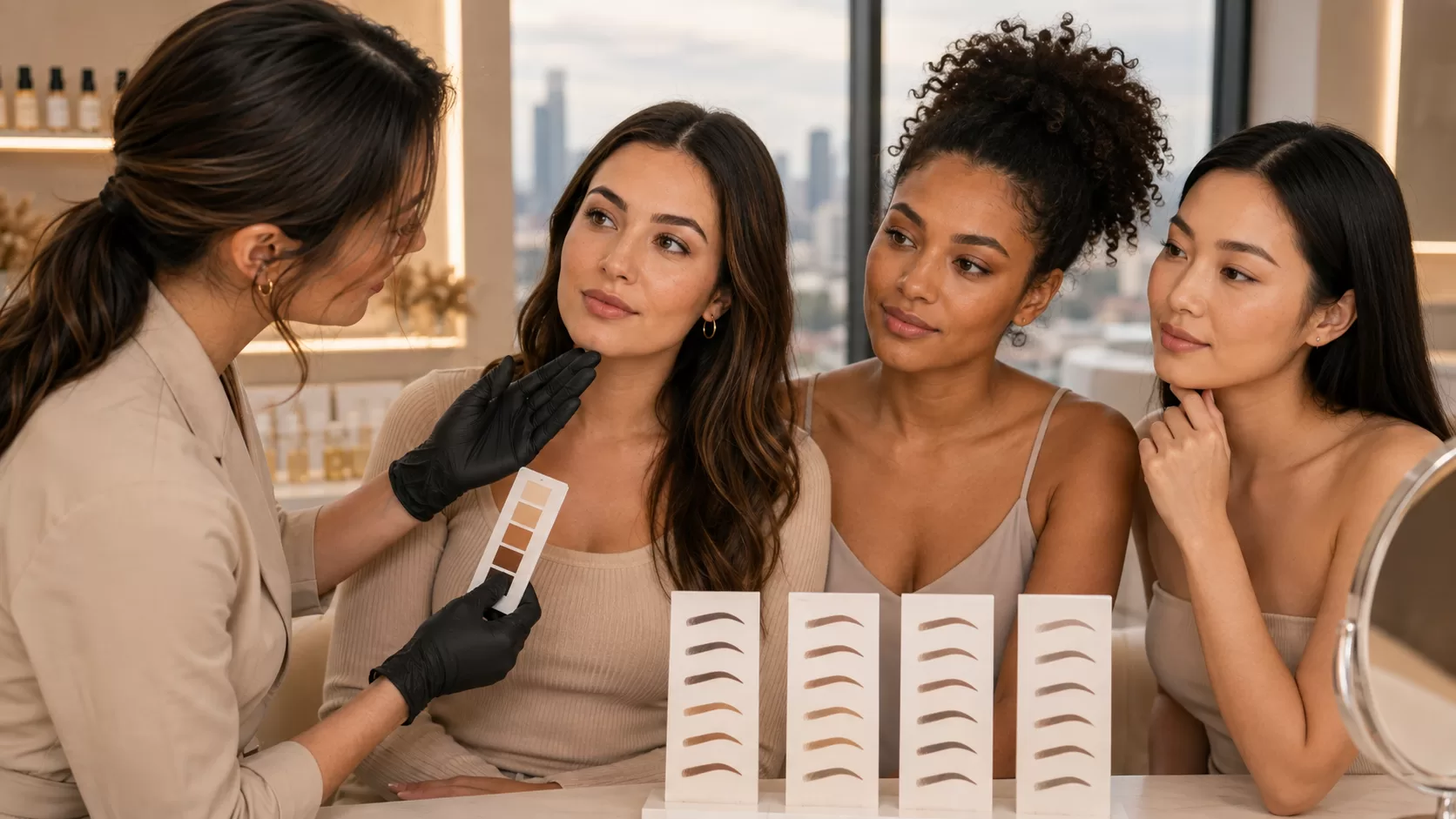
Pigment selection and visual intensity should consider skin undertone, natural brow hair, facial contrast, existing pigment, desired makeup effect, and healed expectations. A rich complexion can look beautiful with a soft brow. A fair complexion can support a defined brow. There is no one intensity assigned to one skin tone. This is personalization, not a formula.
Brides should be especially careful about choosing intensity from wedding photos
This is one of the easiest mistakes to make. You are getting married. You are looking at bridal photos. Every woman has perfect foundation, lashes, lighting, professional photography, and carefully finished brows. You think: That. I want that brow.
But your wedding is one day. Your permanent makeup is not. If you want brows that photograph beautifully at your wedding, build a permanent base that works in everyday life and allow your makeup artist to add temporary wedding-day definition once your skin has fully healed.
Otherwise, you may accidentally choose your bridal makeup intensity for your everyday face. Permanent makeup should support special-event makeup and preserve your ability to adjust it. Discuss your event date before booking so there is time for healing and any recommended follow-up.
What if I am afraid my ombré brows will look too bold?
Then say that early. Not after the first pass. Not after the appointment. At the consultation. Your fear is valuable information.
Tell your artist: “My biggest concern is ending up too dark.” Then ask to discuss softer saturation, lighter front density, healed examples, conservative first-session goals, and what can be added later if you want more.
You do not need to apologize for being cautious. This is your face. A good consultation should make you feel more informed, not pressured into proving how brave you are.
Fresh ombré brows are not the final intensity
Right after treatment, brows can appear stronger, sharper, and more noticeable than the eventual healed result. So do not choose your desired finished intensity based on the expectation that the brows will look exactly the same on appointment day.
At the same time, do not use “they will fade” as an excuse to start dramatically darker than you actually want. The goal is not to make them too dark now and hope everything works itself out. The goal is to plan intelligently for healing. Ask to see healed examples, and follow the aftercare instructions for your procedure.
Do ombré brows fade evenly?
Permanent makeup can fade over time, but no artist should promise that every millimeter will retain identically. Your skin is biological tissue. Different areas can retain pigment differently.
Long-term appearance can be influenced by skin characteristics, skincare, sun exposure, healing, lifestyle, pigment, technique, and previous permanent makeup. This is one reason a perfecting appointment can be useful. The artist gets to assess what actually healed rather than guessing.
But remember: A touch-up does not mean automatically making the brows darker. Sometimes the correct decision is simply refining small areas. Fading also does not guarantee the pigment will disappear completely.
Should oily skin automatically get darker shading?
No. This is an important distinction. If you have oily skin, discuss with your artist whether shading or a combination approach can provide the visual consistency you want. Suitability and retention need individual assessment.
That does not mean oily skin requires a bold brow. Technique choice and aesthetic intensity are two separate decisions. Soft shading, defined shading, and stronger shading are different aesthetic goals. The level should still reflect the look you want.
What if I already have old permanent makeup?
Then your available intensity range may change. Old microblading, powder brows, ombré pigment, or previous correction can create an existing background color.
Your artist needs to evaluate how dark it is, what color it has become, where it sits, whether it fits the desired shape, and how saturated the area already is. If there is already significant pigment underneath, you may not have the same freedom as someone starting with untreated skin.
Adding more pigment is not always the fastest path to a better brow. Sometimes fading or correction needs to come first. Read our guide to nano brows over old microblading before assuming a new procedure can cover the old design.
Permanent makeup is a form of tattooing. The FDA’s permanent makeup fact sheet explains risks such as infection, allergic reactions, and removal difficulties. Discuss relevant health conditions and skin concerns before treatment; a qualified healthcare professional can advise on medical suitability.
The biggest intensity mistake: choosing what gets attention instead of what reduces friction
Here is the real reason permanent makeup is attractive. You are tired of thinking about your brows. That is the pain point. You do not want another beauty decision every morning. You want the decision already handled.
But if your brows are so strong that you constantly wonder, “Are people looking at them?” we have simply replaced one form of brow anxiety with another. That is not freedom.
The best intensity is the one that makes you stop thinking about your eyebrows. You look in the mirror. They work. You move on. That is the win.
Your ombré brow intensity consultation checklist
Bring this list with you.
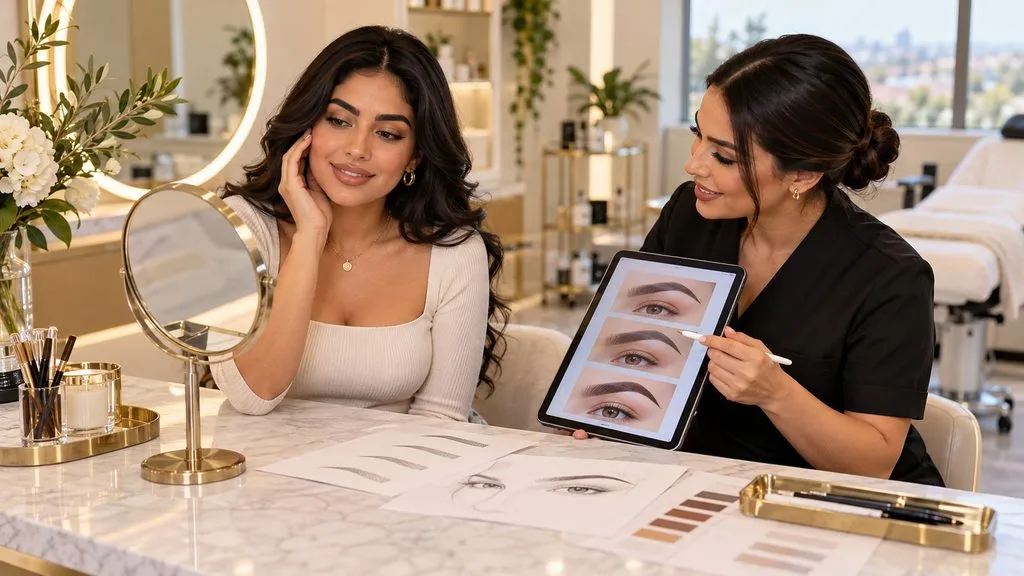
Show your artist
- One photo where you love your brow makeup
- One normal no-makeup or low-makeup photo
- One example you consider too bold
- Any photos of previous permanent makeup
- Examples of brows you like, with an explanation of exactly what you like
Tell your artist
- How often you fill your brows
- How much makeup you normally wear
- Whether you want to stop using brow products entirely
- Whether your biggest fear is being too dark or too subtle
- Whether you have a major event coming up
Ask
- How soft can we keep the front?
- What will this look like with no makeup?
- Can I add more definition after healing if I want it?
- How does my natural brow hair affect the result?
- Can you show me healed examples at different intensity levels?
That conversation should happen before permanent pigment enters the skin. You can also review our current pricing and permanent makeup FAQs before your visit.
A simple decision guide
| If your thought is… | Start the conversation with… |
|---|---|
| “I barely wear makeup.” | Barely-there or soft natural shading |
| “I want to wake up polished but not made up.” | Soft natural ombré brows |
| “I fill my brows completely every day.” | A defined intensity |
| “I wear full makeup most days and love strong brows.” | A more polished or glam intensity, while still thinking long-term |
| “I have no idea.” | A consultation. You do not need to arrive already knowing the answer. |
Still deciding whether shading suits you at all? Start with Are Ombré Brows Right for You? That guide addresses technique suitability; this one helps you communicate your preferred intensity.
Frequently Asked Questions About Ombré Brow Intensity
Will ombré brows look too bold?
They do not have to. Ombré shading can be customized from very soft to more defined. Brow-front density, saturation, pigment choice, shape, natural hair, and the intended healed result all influence how strong the brows appear.
How do I choose a natural ombré brow shade?
Pigment selection should consider your natural brow hair, skin undertone, facial contrast, existing permanent makeup, and desired healed appearance. Matching your scalp hair exactly is not always necessary, especially if your hair is dyed.
What does “soft powder brows” mean?
Soft powder brows use shading to create a gentle filled effect rather than a sharply drawn or heavily saturated eyebrow. The front is usually kept lighter, with more visual definition building toward the body and tail.
Do ombré brows fade evenly?
Permanent makeup can gradually fade, but retention can vary across the brow. Skin characteristics, skincare, sun exposure, healing, lifestyle, technique, and pigment can all affect how different areas retain over time. Complete disappearance is not guaranteed.
What should I bring to my ombré brow consultation?
Bring photos of how you normally wear your eyebrows, a no-makeup or low-makeup photo, examples of brows you like, examples you consider too bold, and information about any previous permanent makeup. These references help communicate your preferred intensity much more clearly than words like “light” or “medium.”
Your goal is not the perfect brow photo. It is the right amount of brow for your life.
That is the decision. Not what looked best on somebody else’s face. Not what got the most likes. Not what happens to be trending this month.
You are choosing what you will see when you wake up. When you go to work. When you run errands. When you meet someone for lunch without makeup. When you dress up. When you do absolutely nothing.
So choose the brow that fits all of those versions of you. If you want maximum flexibility, start softer. If you wear definition every day, own that preference. If you are unsure, do not let uncertainty pressure you into intensity.
A good permanent makeup plan should remove friction from your life, not create a new thing to worry about.
Plan your ombré brow look in Houston
If you are considering Nano Ombré Shading Brows at The Nano Blading, bring examples of your own brow makeup to your consultation and discuss exactly how soft, defined, or polished you want the healed result to feel.
The goal is not simply to choose a shade. It is to choose how much brow feels like you.
